Speaker:
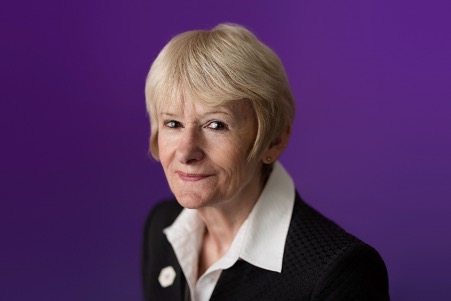
Professor Dame Nancy Rothwell
Bio:
Nancy Rothwell was appointed President & Vice-Chancellor of the University in July 2010, the first woman to lead the University or either of its two predecessor institutions, and her term ended in July 2024. Nancy is currently an Emeritus Professor, a member of the Councils of the Royal Society, MRC and CRUK, a Board member of UK Biobank, the Wolfson Foundation and the Singapore Global Health Advisory Board. She is Deputy Chair for the Government’s Industrial Strategy Council.
Nancy’s research in the field of neuroscience has contributed towards major advances in the understanding and treatment of brain damage in stroke and head injury. She was elected a Fellow of the Royal Society in 2004 and made Dame Commander of the Order of the British Empire in 2005, in recognition of her services to science.
She was the founding President of the Royal Society of Biology and has also served as co-Chair of the Prime Minister’s Council for Science and Technology, Chair of the Russell Group, a member of the UK Investment Council, and as a non-executive director of AstraZeneca. She is currently a Deputy Lieutenant for Greater Manchester, and a member of the Northern Powerhouse Partnership Board and the Health Innovation Manchester Board..
Nancy takes a strong and active interest in public communication of science and regularly gives talks to schools and the public and contributes to television, radio and press.
Nancy’s research in the field of neuroscience has contributed towards major advances in the understanding and treatment of brain damage in stroke and head injury. She was elected a Fellow of the Royal Society in 2004 and made Dame Commander of the Order of the British Empire in 2005, in recognition of her services to science.
She was the founding President of the Royal Society of Biology and has also served as co-Chair of the Prime Minister’s Council for Science and Technology, Chair of the Russell Group, a member of the UK Investment Council, and as a non-executive director of AstraZeneca. She is currently a Deputy Lieutenant for Greater Manchester, and a member of the Northern Powerhouse Partnership Board and the Health Innovation Manchester Board..
Nancy takes a strong and active interest in public communication of science and regularly gives talks to schools and the public and contributes to television, radio and press.
Date:
20 January 2027
Time:
7:30pm – 9:00pm
Add to your calendar
20 January 2027 19:30
20 January 2027 21:00
Europe/London
Lecture: Professor Dame Nancy Rothwell
Summary
The first universities were established a thousand years ago, primarily as places of learning. Later they became hotbeds of research and discovery. Despite some changes, universities at least in the UK have not changed radically for almost two centuries.
I will discuss the value and contribution of universities to society, much wider than those who attend for education or work there. But universities also face challenges as politics, local and global begin to have greater impact, the financial model for the UK higher education system is under real pressure, they face demographic changes, shifts in students’ expectations and the inevitable march of artificial intelligence.